

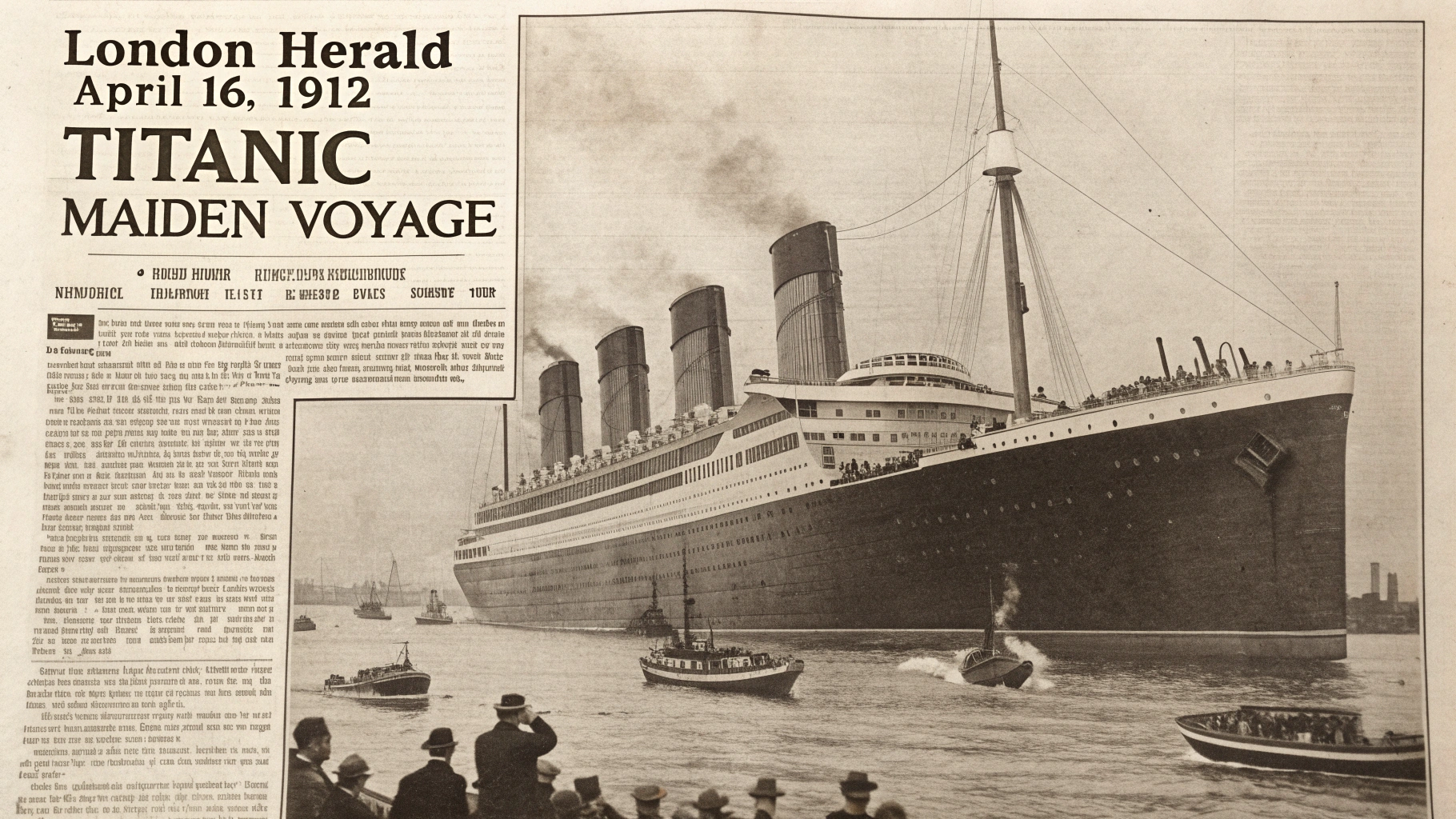
The date April 16, 1912, holds immense historical significance as it marks the day after the RMS Titanic sank in the North Atlantic. As the world grappled with the scale of the disaster, newspapers across the globe rushed to deliver the shocking news. Among the most impactful reports came from the London Herald, a prominent British newspaper known for its sharp journalism and wide reach.
On this date, the London Herald released a historic edition that not only broke the story of the Titanic’s sinking to the British public but also shaped early perceptions of the tragedy. Headlines, survivor accounts, speculation, and emotional appeals filled the front pages, creating a piece of media that has since become a collector’s item. This edition continues to be studied today by historians, journalists, and enthusiasts alike.
This article explores the ethics, impact, and legacy of the London Herald’s April 16, 1912 issue. By analyzing how it reported the Titanic tragedy, we uncover how early media influenced global reaction, public sentiment, and even political responses to one of history’s most well-known maritime disasters. https://hotpink-butterfly-363924.hostingersite.com/free-gmail-netlify-app-guide/
What is the London Herald?
The London Herald was a British daily newspaper that gained popularity for its bold reporting, populist tone, and commitment to uncovering breaking stories. By 1912, it had already built a reputation for its timely coverage and wide distribution. The paper was especially well known for sensational yet impactful headlines that captured the public’s attention.
On April 16, 1912, the London Herald’s coverage of the Titanic sinking played a pivotal role in relaying information to the public, despite the lack of official confirmation from many sources. The newspaper’s layout featured massive black-letter headlines and heartbreaking sub-stories that brought the Titanic disaster into people’s homes with stunning immediacy.
Core Ethical Principles for Digital Platforms
Transparency
Although the London Herald was not a digital platform, transparency was just as important in 1912 as it is today. The newspaper had to ensure that its stories were as accurate as possible, given the limited communication technology of the time.
Privacy
The Herald walked a fine line between sharing essential public information and invading the privacy of the victims and their families. Ethical journalism demanded sensitivity, especially when reporting on passengers who had perished.
Consent
In 1912, standards for obtaining consent were far looser than today. However, the Herald’s use of survivor quotes and telegraph messages required consideration, especially in how they were framed for public consumption.
Safety
Though not directly responsible for public safety, newspapers influenced emotional and social safety. Ethical reporting could prevent mass panic, while sensationalism could trigger it. The London Herald bore this responsibility in its Titanic reporting.
Accountability
If any inaccuracies were printed, newspapers like the Herald were ethically obligated to issue corrections. Given the confusion after the Titanic sank, many papers, including the Herald, had to update or retract stories as more facts emerged.
The Ethical Framework Behind the London Herald’s 4/16/1912 Edition
User Consent and Authenticity
The London Herald’s edition of April 16, 1912, featured firsthand survivor accounts, relayed via telegraph. Some quotes were allegedly taken without explicit permission, raising ethical concerns. This poses questions about the authenticity and ownership of personal stories during moments of crisis.
Although journalistic urgency may justify quick publication, the lines between urgent reporting and exploitation blur when victims’ words are printed for commercial gain. The Herald’s challenge was to maintain ethical storytelling amidst public pressure for information.
Data Collection and Privacy Policies
In 1912, the concept of data privacy was minimal, but some ethical parallels remain. For instance, publishing names of deceased or missing passengers without notifying families would today be seen as a breach of ethical conduct. The Herald was criticized by some for printing long passenger lists and speculating on survival before confirmation.
The responsibility to maintain journalistic privacy ethics means delaying names or details until authorities confirm and next-of-kin are informed—something largely overlooked in the chaos following the Titanic’s sinking.
Moderation and Harmful Content
Sensationalism sells—but it can also cause harm. The London Herald’s front page screamed of “TITANIC DISASTER – GREATEST SHIP SINKS – HUNDREDS DEAD,” with subheadlines stating that over 1,500 had perished. This may have informed the public, but it also generated widespread shock and grief.
While truthful reporting is ethical, the tone, structure, and imagery used must be considered. Panic, anger, and emotional turmoil followed such headlines. In the modern sense, these would be carefully moderated or contextualized to protect readers.
Transparency and Community Trust
Publishing Clear Terms of Service
In 1912, there were no formal digital terms of service, but newspapers like the Herald held an unspoken contract with readers—to inform truthfully and responsibly. Failing to meet this standard risked eroding community trust.
The Titanic story was rapidly evolving, and initial reports were full of conflicting information. The Herald printed what it knew, sometimes relying on rumors. The lack of attribution or source clarity for many stories posed transparency concerns.
Ethical Marketing Practices
Even in 1912, newspapers were commercial ventures. The London Herald capitalized on the Titanic story by increasing distribution, sales, and visibility. Ethical boundaries blur when tragedy becomes a tool for profit.
Did the Herald manipulate headlines or imagery to drive circulation? Possibly. Giant fonts, emotional language, and graphic descriptions were tools used to sell more papers. From today’s ethical perspective, this would raise red flags under tragedy-driven marketing.
The Role of Community Guidelines
Establishing Moral Compass
While formal community guidelines did not exist, newspapers followed editorial codes of conduct. Editors bore the responsibility to approve stories and remove insensitive or false content.
In the Titanic coverage, Herald editors were tasked with distinguishing between fact and fiction, rumors and verified reports. That role became the moral compass of the paper.
Promoting Inclusivity
One of the overlooked aspects of Titanic reporting was who was covered. First-class passengers received more attention, with less focus on third-class immigrants or crew. Ethical reporting must represent all affected communities fairly.
The London Herald had limited inclusivity in its reporting, reflecting societal biases of the time. This lack of balance still affects how Titanic history is remembered.
Ensuring Enforcement
Enforcement of journalistic ethics came down to editors and public accountability. If a paper printed falsehoods or offensive content, it faced reader backlash, damaged credibility, or legal consequences.
The Herald’s coverage was largely respected, but its rush to publish led to errors. Some survivors’ statuses were misreported, and casualty numbers fluctuated daily.
Algorithm Bias and Ethical Use of AI
How AI is Used?
In 1912, artificial intelligence didn’t exist, but similar challenges existed around editorial bias. Decisions about what stories ran and which details were emphasized reflected editorial “algorithms.”
Stories about prominent figures like John Jacob Astor or Isidor Straus were prioritized, while tales of steerage passengers were buried deep in the paper.
Ethical Oversight
Bias in editorial choices influenced public perception. The Herald had the power to elevate or ignore stories based on class, race, and nationality—consciously or unconsciously shaping the historical narrative.
Human Intervention
Without automated tools, every headline and image went through human review. Yet even then, errors and ethical lapses occurred. It highlights the ongoing need for accountability and editorial balance.
Age Appropriateness and Parental Controls
Age Verification
Newspapers were accessible to all, including children. The Titanic headlines were horrifying and visible at every corner stand. There was no concept of age-appropriate censorship in print.
Sensitive Content Warnings
The Herald printed stark images of mourning, bodies, and grief. No warnings were given, and many families were upset by the paper’s intense presentation of death and suffering.
Legal Implications
Today, such coverage might raise questions about ethical exposure and child trauma. In 1912, however, the focus was on speed, not sensitivity, especially when reporting high-impact stories like Titanic.
The Ethics of Monetization
Transparent Revenue Models
The London Herald, like other newspapers, made money from daily sales and advertising. April 16, 1912, was likely one of its highest-selling issues due to public interest in the Titanic disaster.
Fair Compensation
While reporters were paid, the subjects of their stories, especially survivors, were not compensated or asked for permission. This raises issues of story ownership and exploitation.
Respect for User Value
By turning human tragedy into front-page content, newspapers had to weigh public interest against ethical treatment. The Herald’s editorial team walked a tightrope between informing and sensationalizing.
Inclusivity and Representation
Diverse Voices
Titanic passengers came from many countries, classes, and cultures. The Herald’s coverage focused more on British and American elites, while downplaying other stories.
Anti-Discrimination Policies
There was minimal effort to cover minority passengers or non-English-speaking survivors. The absence of their stories created an incomplete narrative.
Accessibility
Language https://fr.wikipedia.org/wiki/Language used in newspapers was complex, often inaccessible to lower-literacy readers. This excluded certain demographics from fully understanding the tragedy’s impact.
Legal vs. Ethical: A Crucial Distinction
Not Just Compliance
The London Herald’s Titanic coverage was legally sound but not always ethically perfect. It fulfilled its journalistic duty but sometimes at the expense of empathy or accuracy.
Case in Point
Publishing unverified names or gruesome details could emotionally damage families. Just because it was allowed by law didn’t mean it was ethically right.
Human-Centered Approach
Modern standards push for human-focused journalism, something the Herald partially achieved but with notable gaps. It reflected the era’s values more than today’s expectations.
Ethical Innovation and Future Roadmap
Proactive Approach
Although the London Herald no longer exists, its legacy informs modern journalism. Its Titanic coverage is studied in journalism schools to understand the balance between urgency and ethics.
Ethical Audits
Media today are expected to conduct reviews of how they handle breaking news. The 1912 coverage lacked such mechanisms, leading to preventable mistakes.
Community-Driven Progress
Lessons from 1912 push modern newsrooms to include diverse voices, respect privacy, and slow down reporting when necessary to verify facts.
Conclusion
The London Herald’s April 16, 1912 edition captured one of the greatest tragedies of the 20th century in real-time. While it informed and connected the public, it also reflected the journalistic limitations and ethical challenges of the era. Fast-moving headlines, emotional storytelling, and factual uncertainty were all part of the narrative. https://hotpink-butterfly-363924.hostingersite.com/shop-buy-pinqizmorzqux-online-store/
Ethics in media were not as well-defined as today, but the Herald’s Titanic coverage reveals a deep tension between truth and trauma. Its front page helped shape collective memory, but also reminds us that every media story carries a human cost.
By studying this historic publication, we better understand the role of media in times of crisis—and how crucial ethical principles are in preserving trust, dignity, and truth in public reporting.
Frequently Asked Questions (FAQs)
1. What was in the London Herald on April 16, 1912?
The paper featured breaking news of the Titanic sinking, survivor accounts, casualty estimates, and emotional headlines describing the disaster’s scale.
2. Was the London Herald accurate in its reporting?
Initial reports contained some inaccuracies due to confusion and limited communication, but the paper updated stories as new facts emerged.
3. Did the London Herald exploit the Titanic tragedy?
While it informed the public, some argue the newspaper sensationalized headlines to boost sales, raising ethical concerns.
4. Who was highlighted in the Herald’s coverage?
Most coverage focused on wealthy or famous passengers, while third-class passengers and crew received less attention.
5. Were any ethical rules violated by the Herald?
By modern standards, yes—some privacy breaches, lack of consent, and sensationalism would be deemed unethical today.
6. Did the Herald publish survivor names?
Yes, often before official confirmation, which caused distress among families and raised questions about source verification.
7. How did the Herald influence public opinion?
Its dramatic headlines and emotional reporting helped shape early reactions, mourning, and public outcry for safety reforms.
8. Are copies of this issue still available?
Original issues are rare but can be found in archives, museums, or private collections. Replicas are sold as historical keepsakes.
9. How does this edition compare to modern media coverage?
Modern media uses digital verification, ethical frameworks, and balanced storytelling. The Herald lacked many of these systems.
10. What can journalists learn from the London Herald’s 1912 issue?
They can learn the importance of speed vs. accuracy, the risks of emotional storytelling, and the long-term impact of ethical decisions.

